Faster Campaign Production
Traditional workflows force marketers to wait on developers for every content change. With pre-tested modules and simple content fields, email production time drops from days to minutes.
Modular email templates separate structure from content, so marketing teams can build on-brand campaigns without touching code. Layouts stay consistent, production speeds up, and built-in AI tools help with copy and accessibility.
A modular email template is a pre-built email layout made up of independent, reusable content blocks called modules. Each module serves a single purpose: a header, a hero image, a product card, a call-to-action, or a footer. Instead of building every email from scratch or editing raw HTML, teams assemble campaigns by selecting and arranging these tested modules, then filling in editable content fields like headlines, images, and links.
The key principle is the separation of structure and content. A developer or agency defines the template structure once, locking down brand styling, responsive behaviour, and email client compatibility. Marketers then work within that structure through a visual interface, producing on-brand campaigns in minutes rather than days. Because the underlying HTML never changes, every email renders correctly across Gmail, Outlook, Apple Mail, and other clients without additional QA.
This approach is sometimes called an email design system because it mirrors how web design systems work: a library of approved components governed by shared rules. The result is faster production, consistent branding, and freedom from ESP-specific template builders that create vendor lock-in.
Even with templates in place, teams face the same bottlenecks again and again.
Every content tweak requires a developer to edit HTML files. Quick updates take days, not minutes.
A missing closing tag or misaligned table can destroy an entire campaign layout across all email clients.
Teams maintain multiple versions of 'the template' across Google Docs, Slack threads, and local folders.
Three steps from HTML template to finished campaign.
Upload your HTML and define the header, footer, and available modules.
Developers mark editable regions using tags like mm-editable. Marketers then see clean, labelled content fields. See the full tag reference.
Marketing assembles modules and fills in content. No code needed.
Your existing HTML stays intact. Just add attributes to mark editable regions:
<td mm-editable mm-label="Hero Headline">
  Welcome to Our Summer Sale
</td>
Structure stays protected while marketers get full control over content. Full tag reference | Book a demo
Modular Mail is an email CMS built for teams that need a smarter way to manage modular email templates.
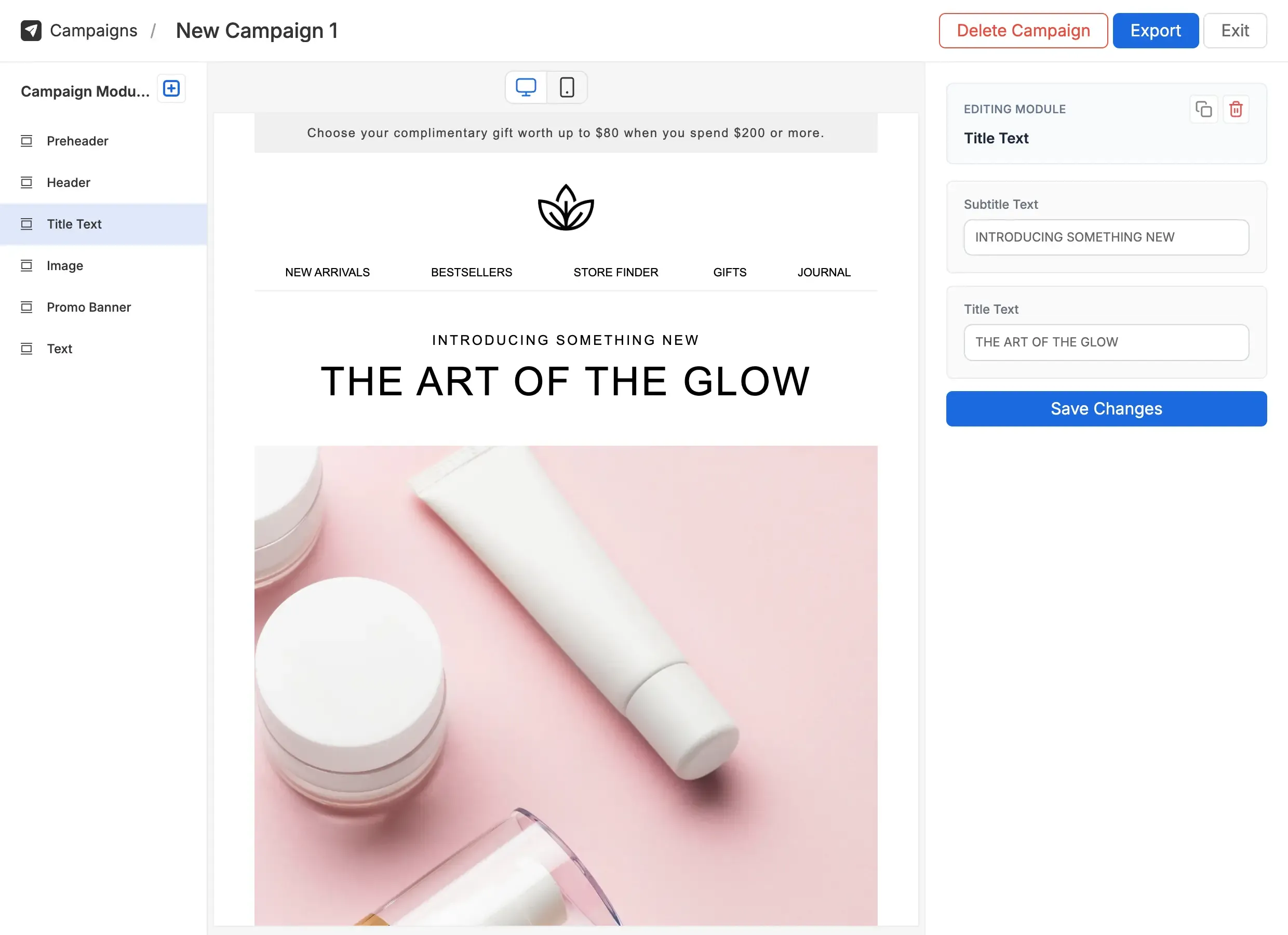
When structure is protected and content is flexible, teams move faster, stay on-brand, and stop depending on developers for every campaign.
Traditional workflows force marketers to wait on developers for every content change. With pre-tested modules and simple content fields, email production time drops from days to minutes.
Your brand's colours, fonts, spacing, and layout rules are locked into the template structure. Marketers edit through defined fields, so brand guidelines are enforced automatically on every send.
Export clean HTML to Mailchimp, Klaviyo, Salesforce, HubSpot, or any platform. Your investment in modules and content never gets locked inside someone else's ecosystem.
Marketers see clean, labelled fields for headlines, images, links, and CTAs. The underlying HTML is completely hidden. If your team can fill in a form, they can build a campaign.
Agencies managing multiple clients and enterprises operating across regions run separate brands from one platform. Each gets its own locked-down email design system, modules, and content rules.
Scattered Google Docs, Slack threads, and local folders make versioning a nightmare. A centralised repository streamlines your email workflow so everyone works from the same approved modules.
Building a modular email template system that lasts requires planning. Start by auditing your existing email campaigns to identify repeating patterns. Most teams find that 80% of their emails use the same 8 to 12 modules in different combinations.
Design each module to be self-contained. A product card module should include its own padding, background, and responsive breakpoints so it renders correctly regardless of what sits above or below it. Keep module widths consistent (typically 600px for maximum email client compatibility) and use a shared set of design tokens for colours, fonts, and spacing.
Test every module individually across email clients before combining them into full templates. Once your module library is tested, marketers can assemble new campaigns confidently, knowing each building block has already been validated. Read our practical guide to getting started for a step-by-step walkthrough.
Who need to produce campaigns quickly and confidently without relying on developers for every change.
A retail brand launching weekly promotional emails needs to swap hero images, update product prices, and change CTAs without waiting on developers.
Who juggle multiple clients and deadlines while maintaining brand consistency across all campaigns.
A digital agency managing 12 client accounts needs to deliver 40+ campaign variations per month while maintaining each brand's unique design system.
Who must maintain consistency across markets, languages, and regional teams at scale.
A SaaS company with offices in EMEA, APAC, and Americas needs to localize campaigns across 8 languages while ensuring brand consistency.
Over the years, teams have found their own ways to manage email modules. Here's how they compare.
Set up your first modular template in under 2 hours.